Concrete Driveway Building
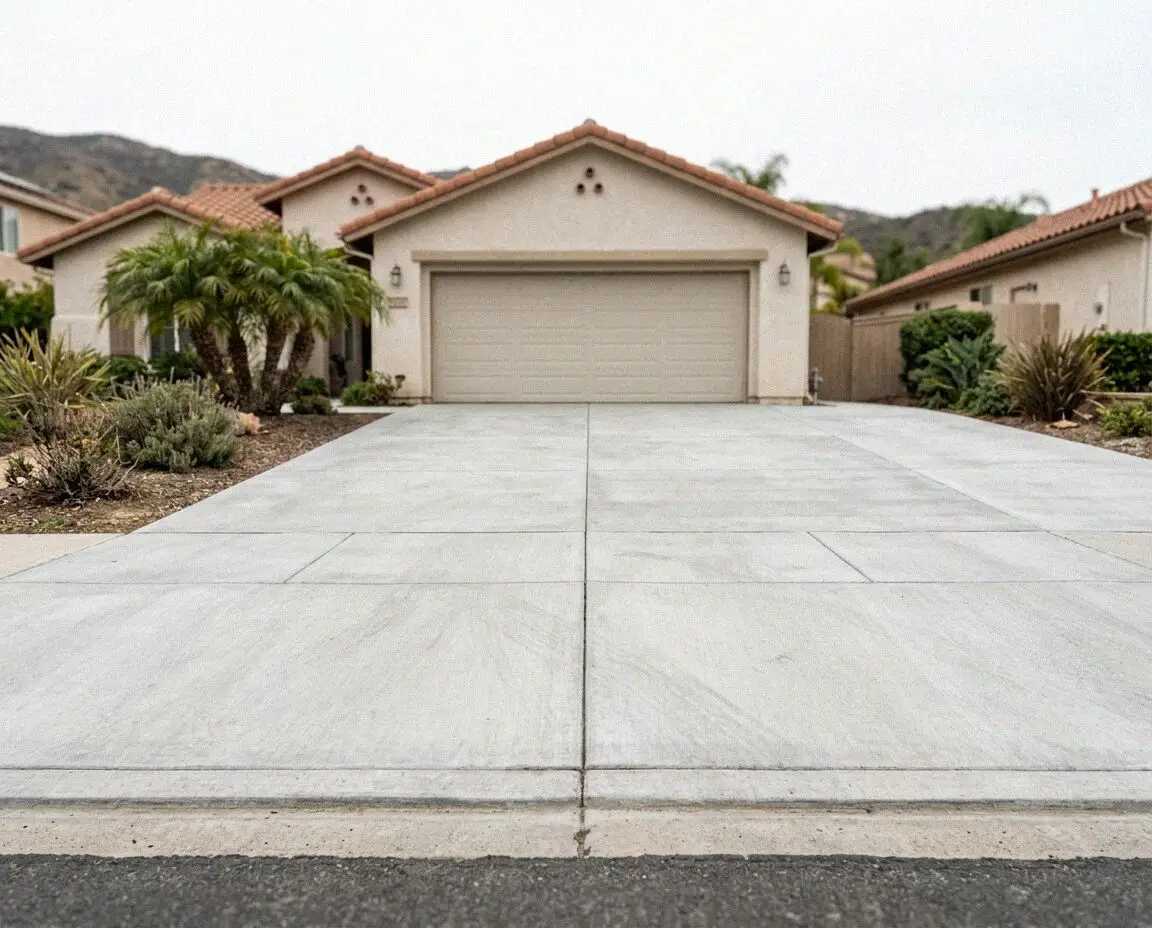
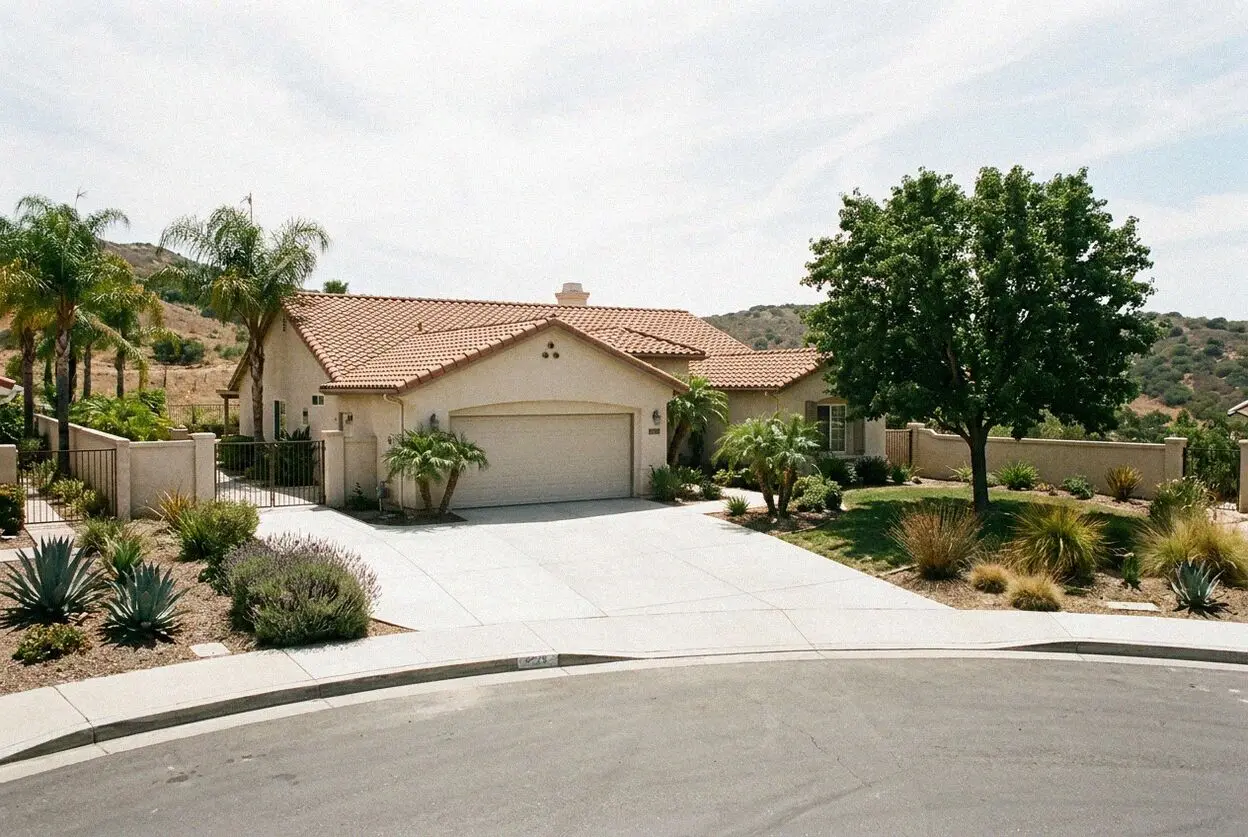
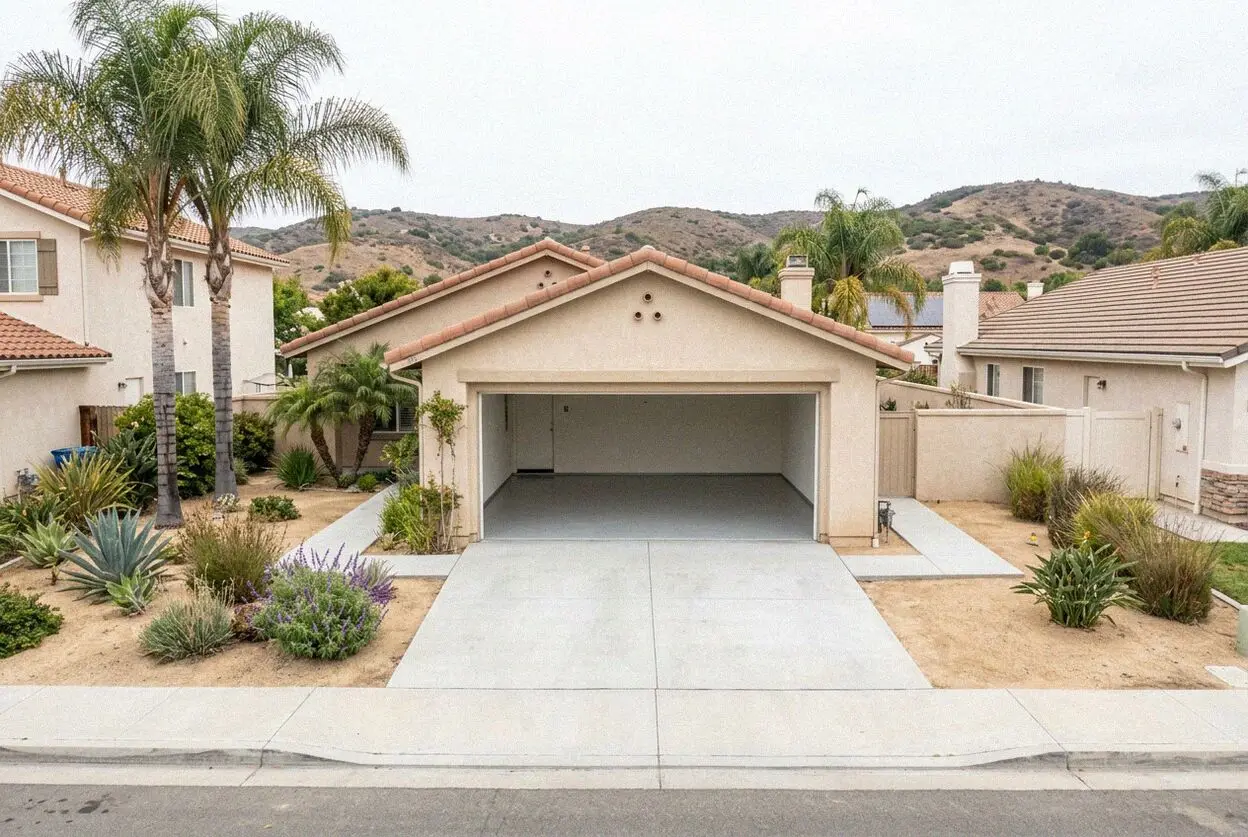
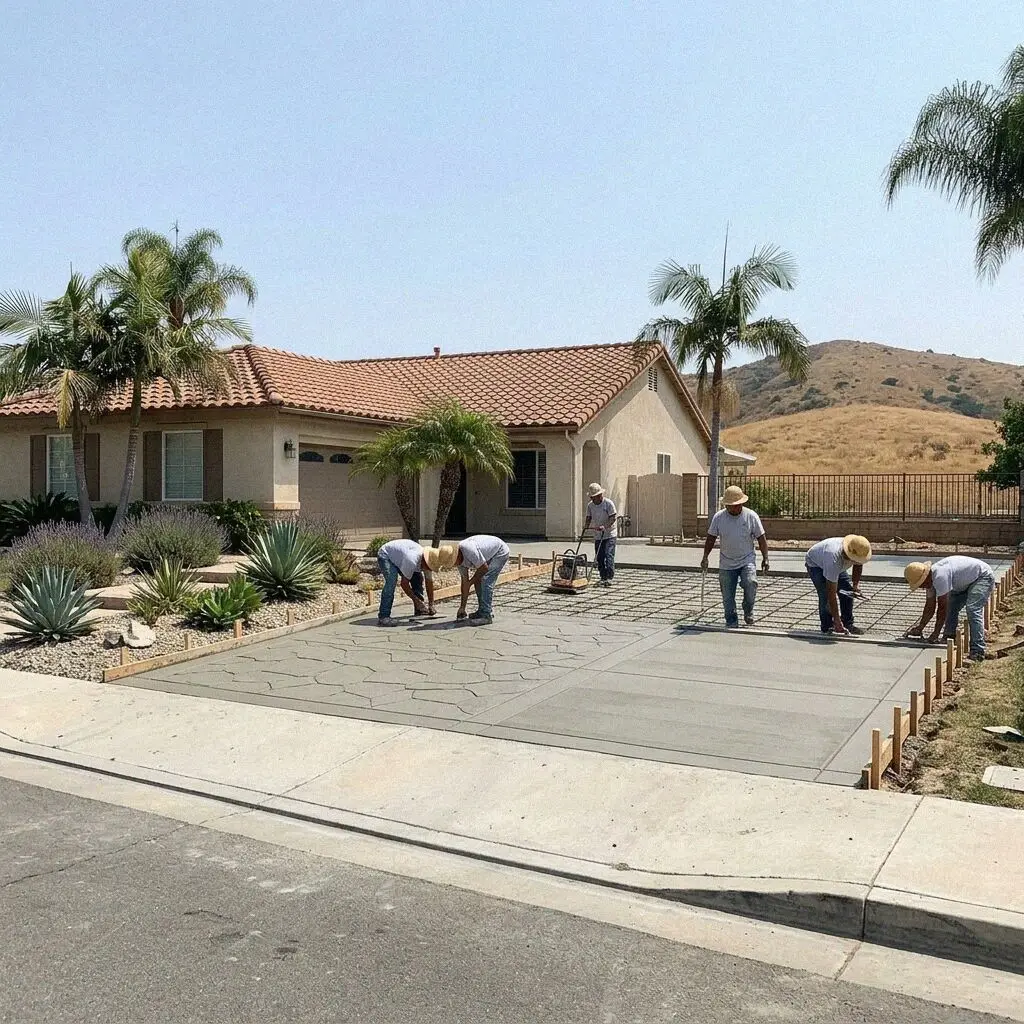
A two-car tract drive rebuilt as one slab wide enough for three cars, cleared with the association and tied to a new apron at the curb.

Driveways, pool decks, retaining walls and patios for the hillside lots Mission Viejo is built on, Aegean Hills to Painted Trails. Call for a free estimate, measured at your home and written on the spot.


 5.0 Stars Rated by our customers · Google, Facebook and the BBB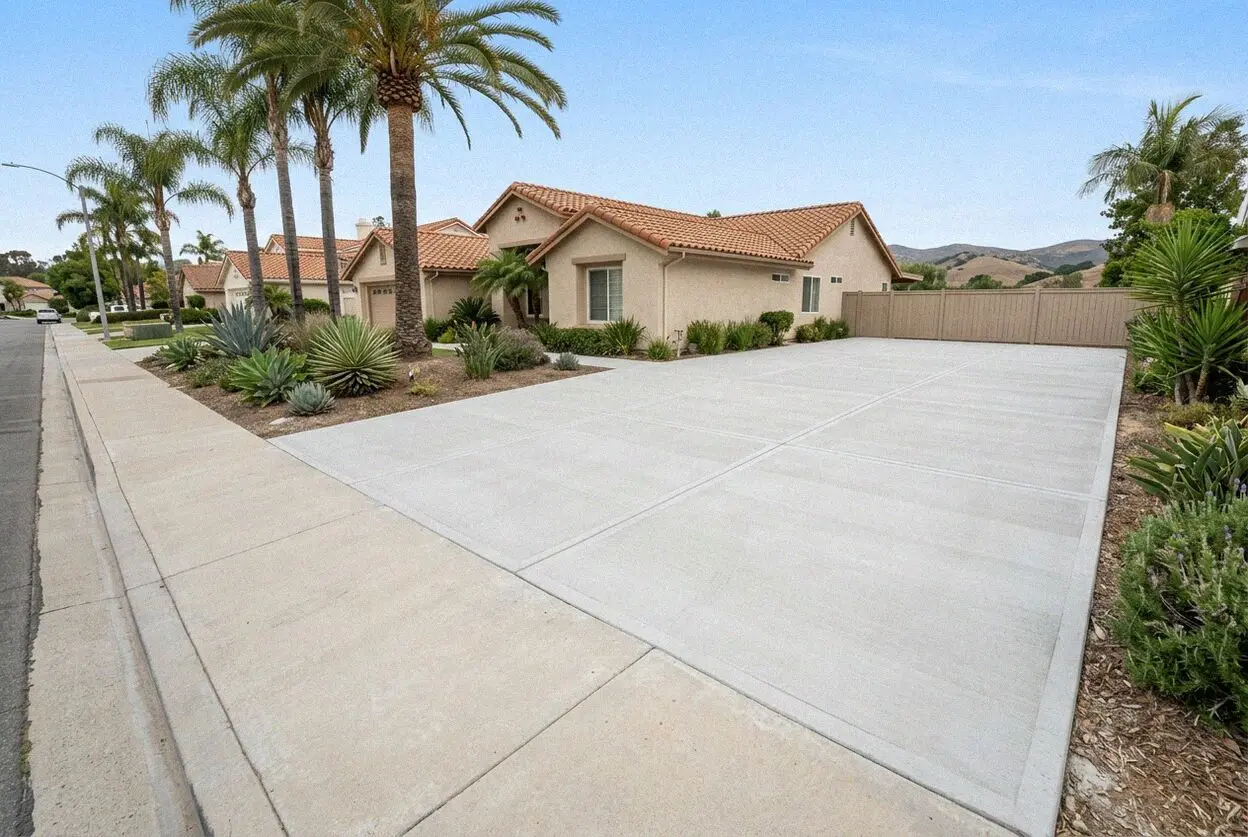
Sixteen concrete services, each on its own page. A driveway rebuilt on a pitched lot, a pool deck poured around existing coping, a wall holding a rear slope or a slab for a room addition: Saddleback Mission Viejo Concrete builds each to the California Residential Code and to the grade of your lot.
A two-car tract drive rebuilt as one slab wide enough for three cars, cleared with the association and tied to a new apron at the curb.
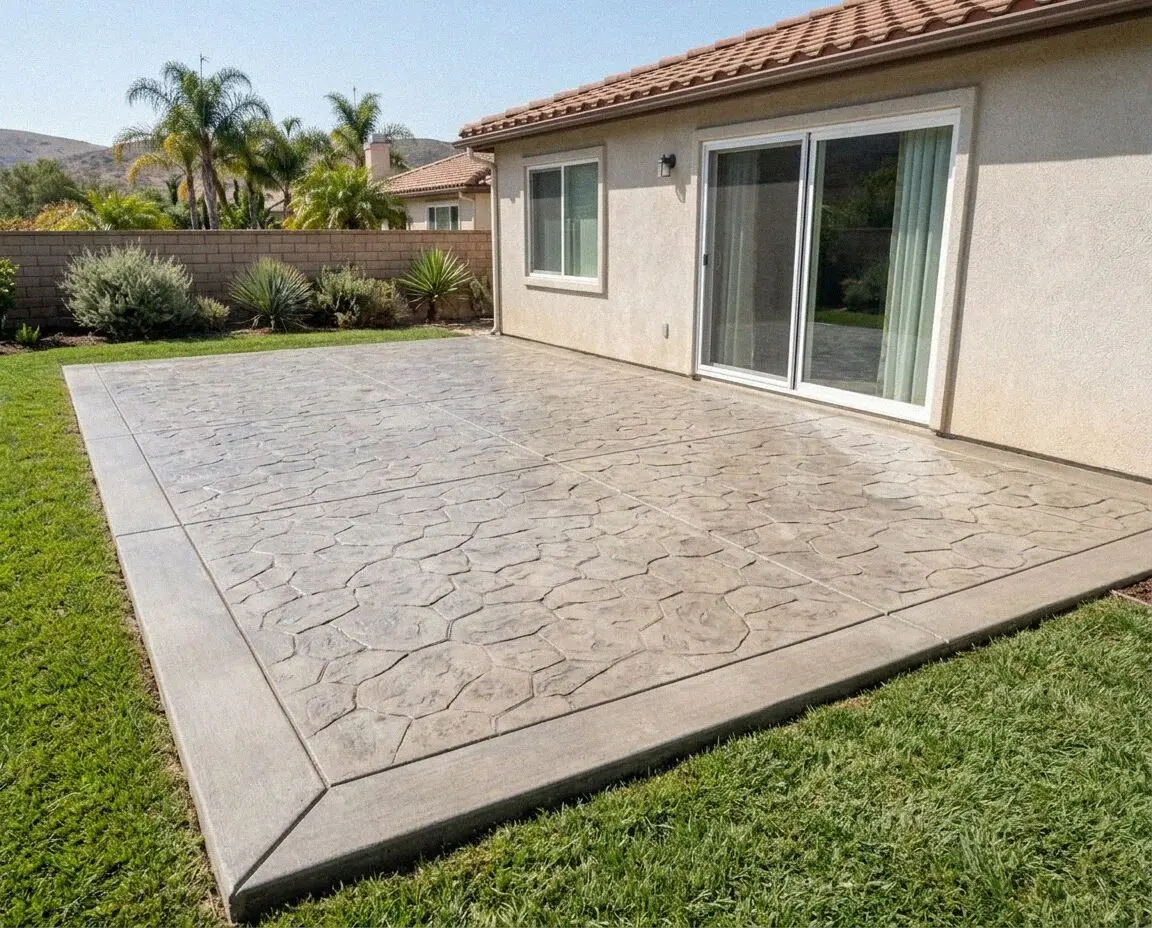
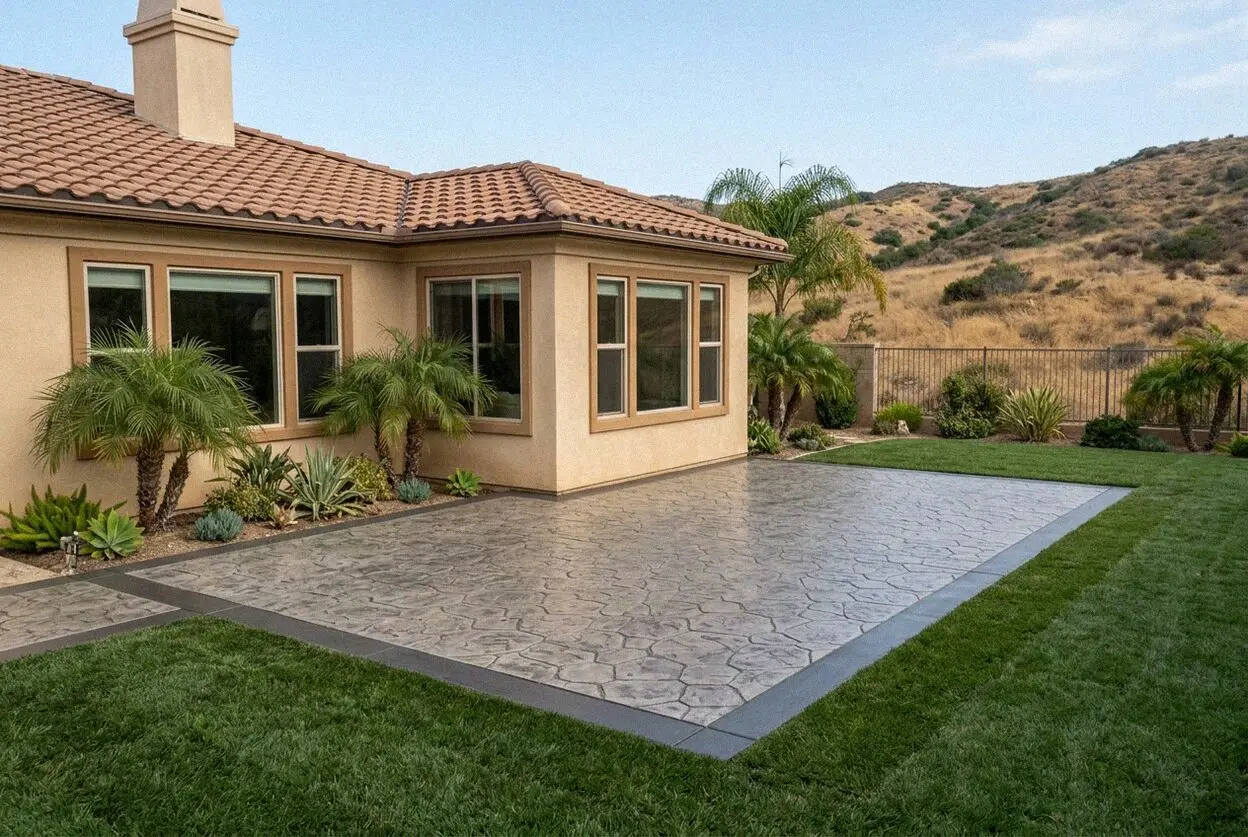
A rear patio poured to the fall the pad was graded with, held under the stucco line, stopped short of the slope and drained to a box.
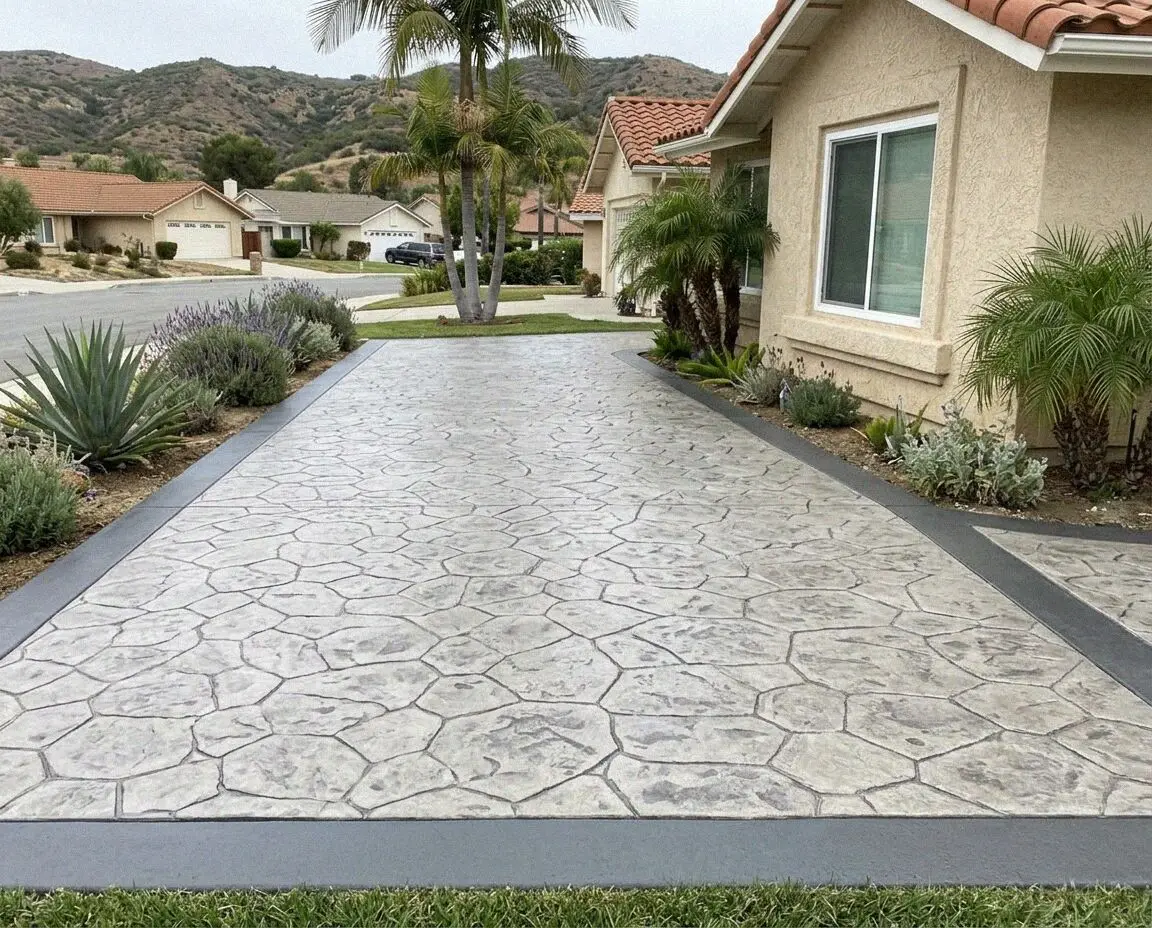
Stamped patios, pool decks and entry courts with the color through the full 4 inches, and the chip approved by your committee before we pour.
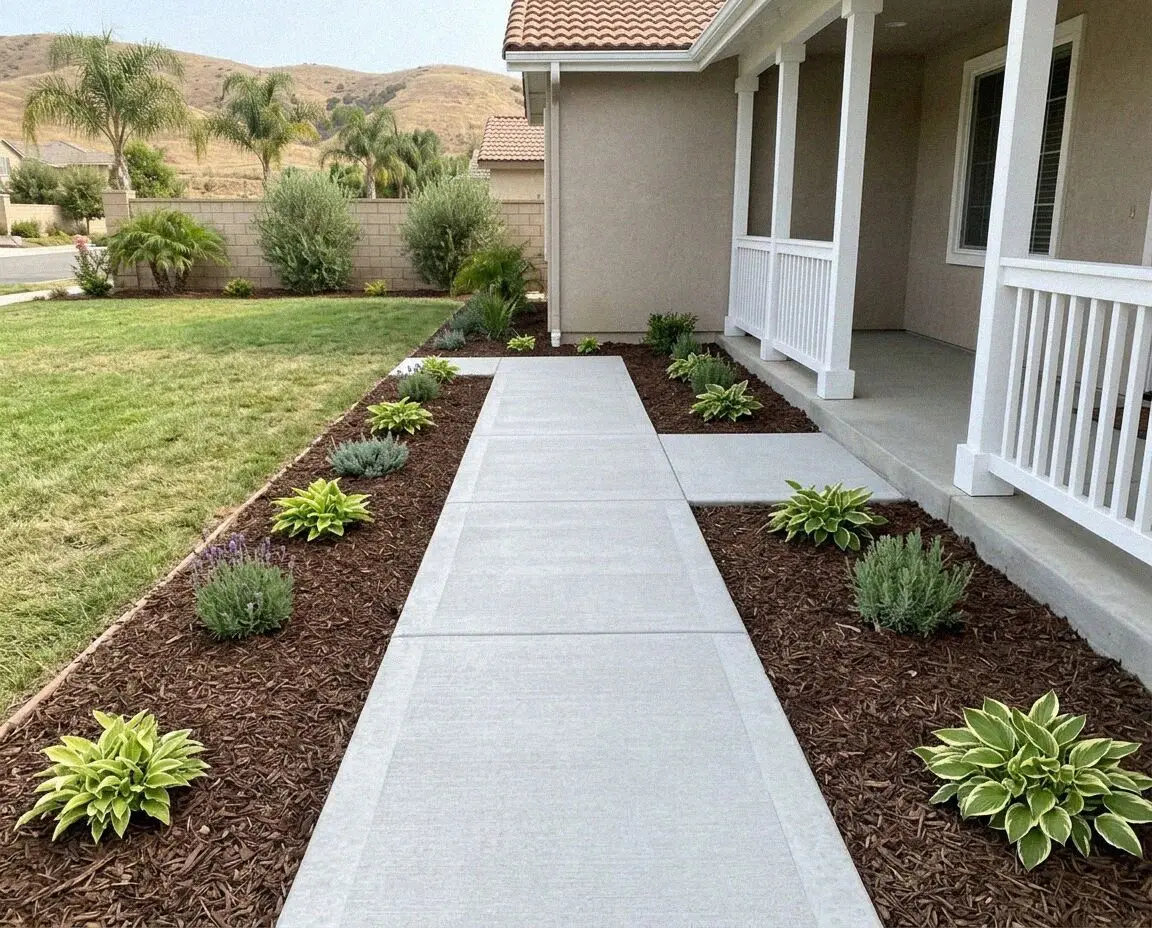
A walk built to the grade between the curb and the door, as a walk, a ramp or steps, 4 inches over compacted base with a joint on the seam.
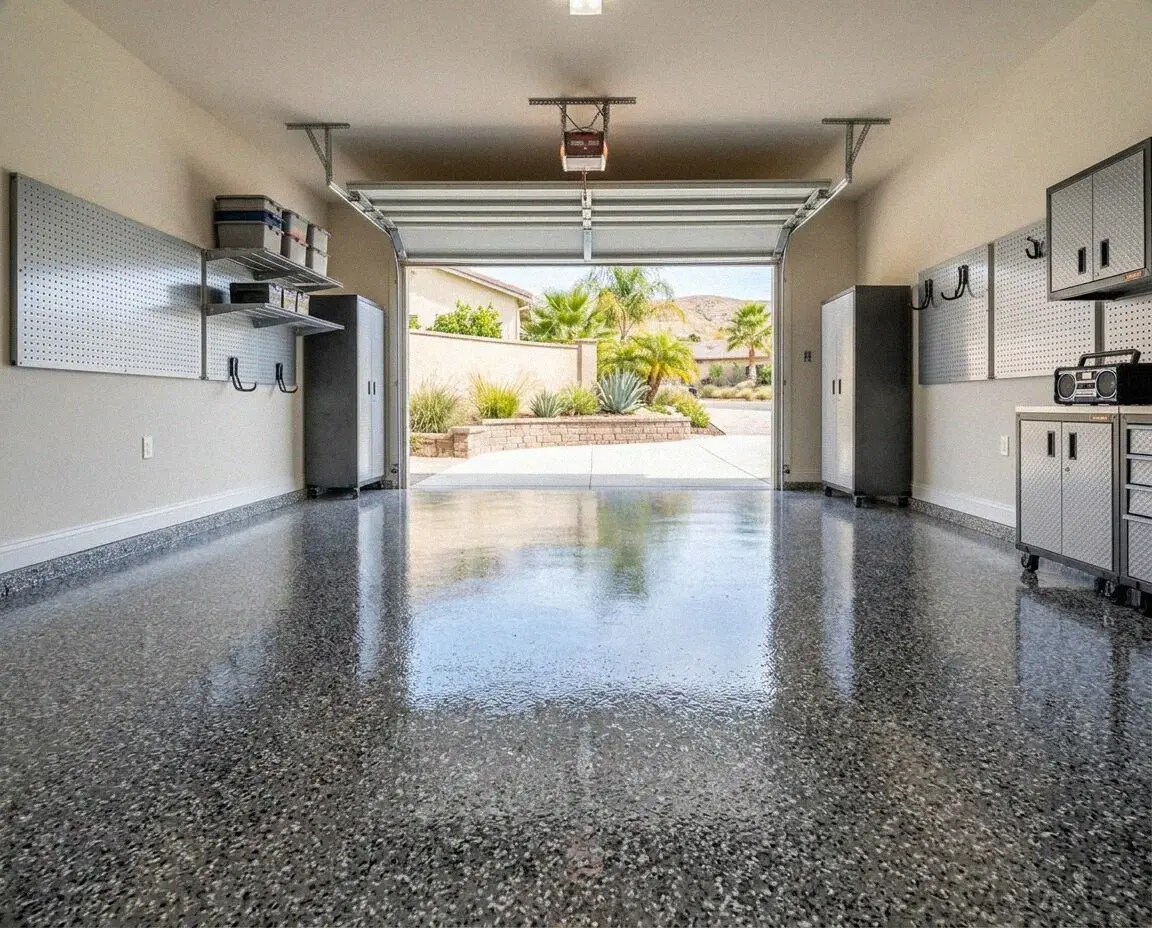
A garage floor repoured 5 inches thick with a fall back to the door, packed over the half of the pad that dropped and doweled to the footing.
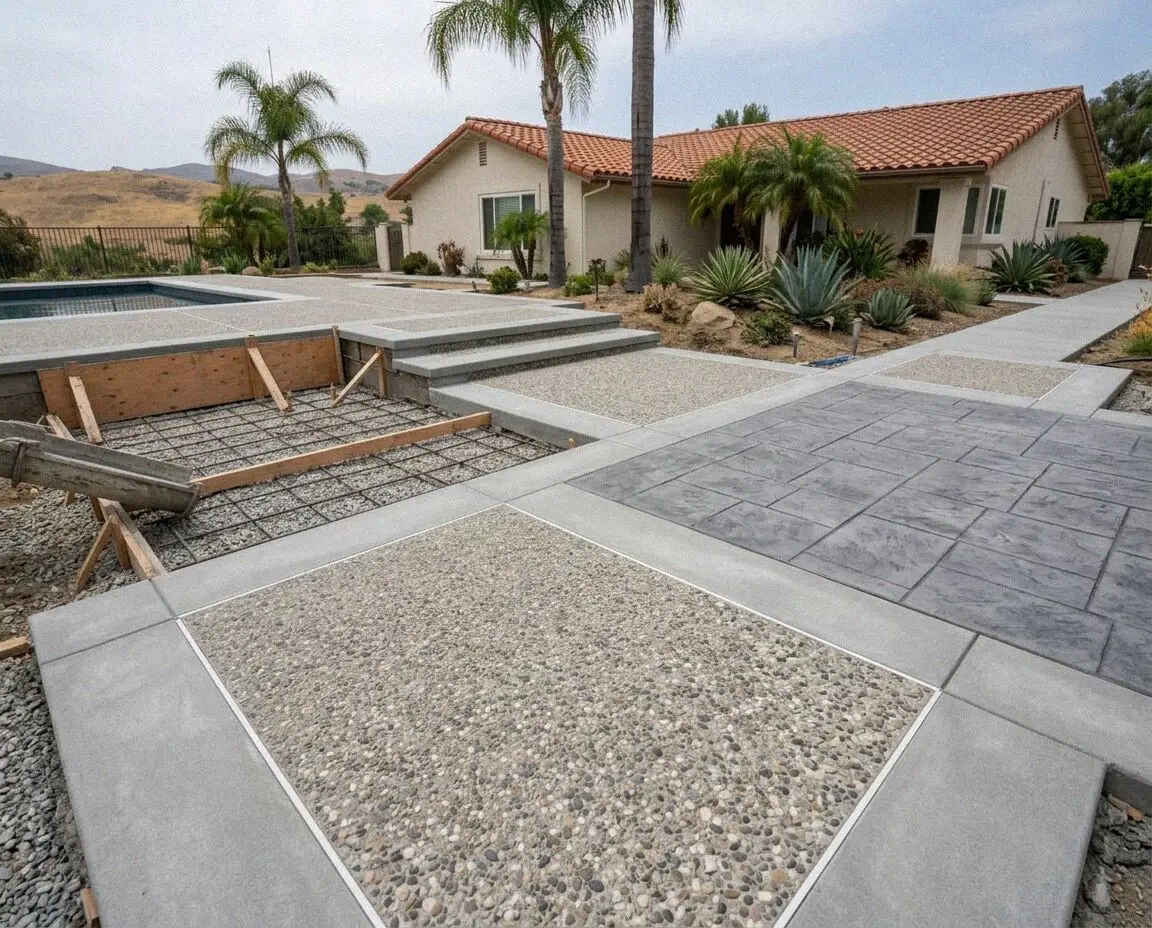
Exposed aggregate, integral color, stamped and salt finishes, matched to the tract's original walks and written up for the association first.
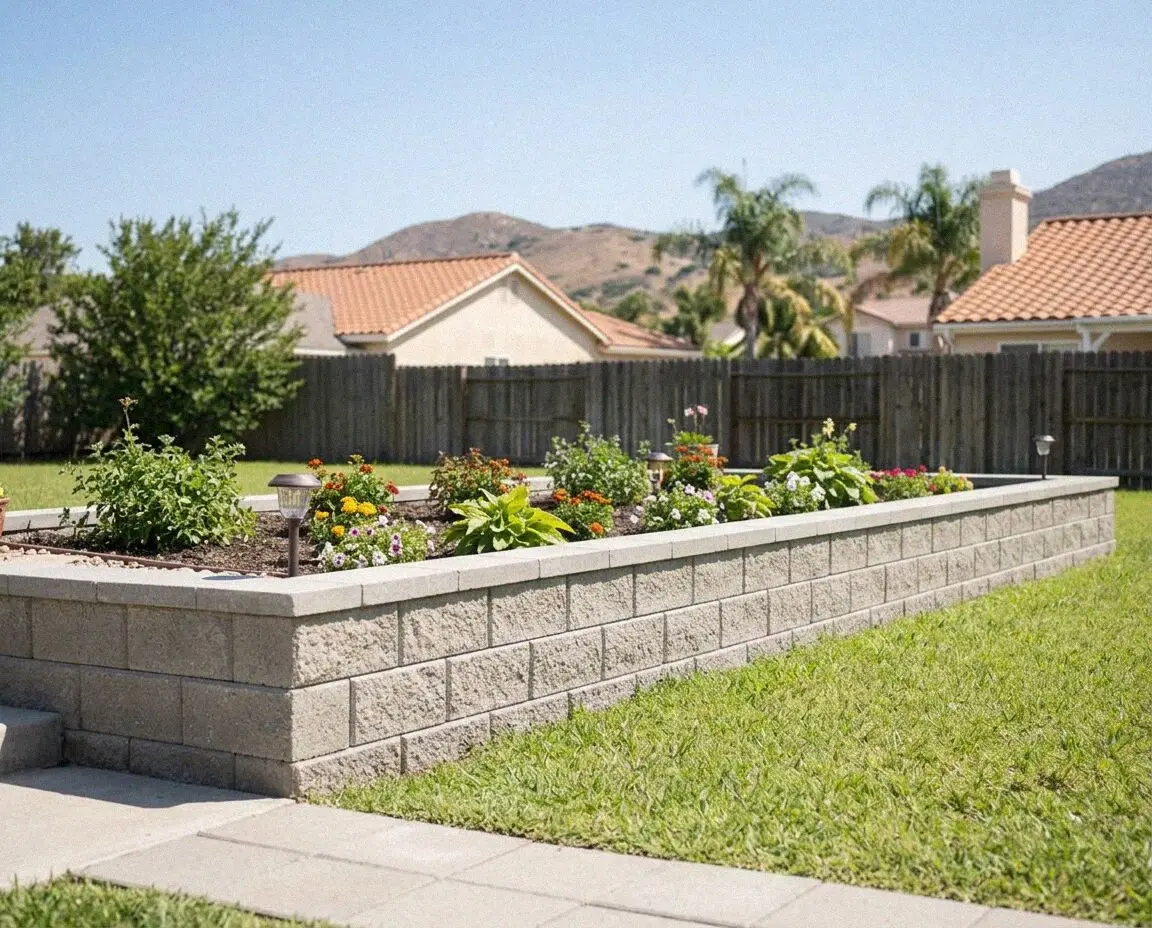
Tie or block wall leaning over the slope? A poured wall footed in cut ground and drained to daylight holds the yard for the life of the home.
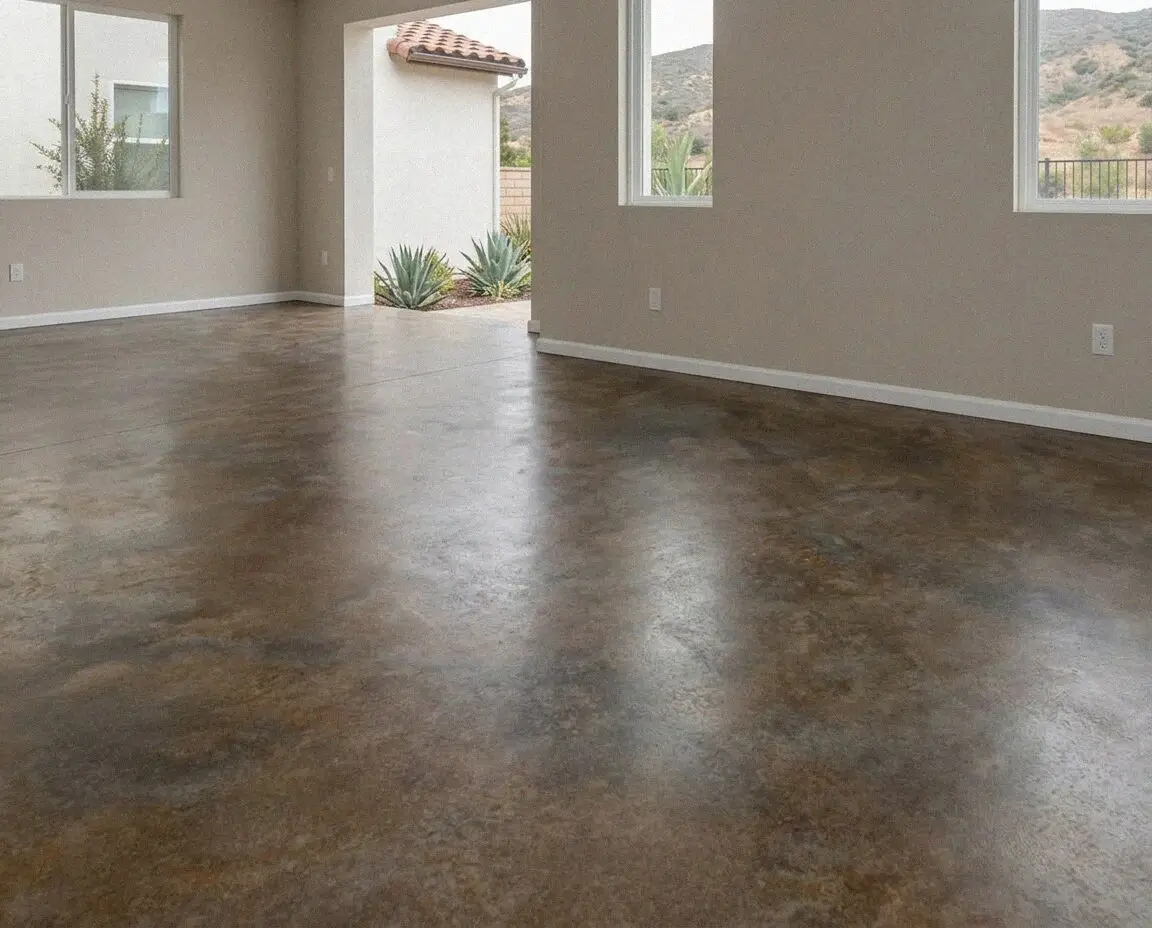
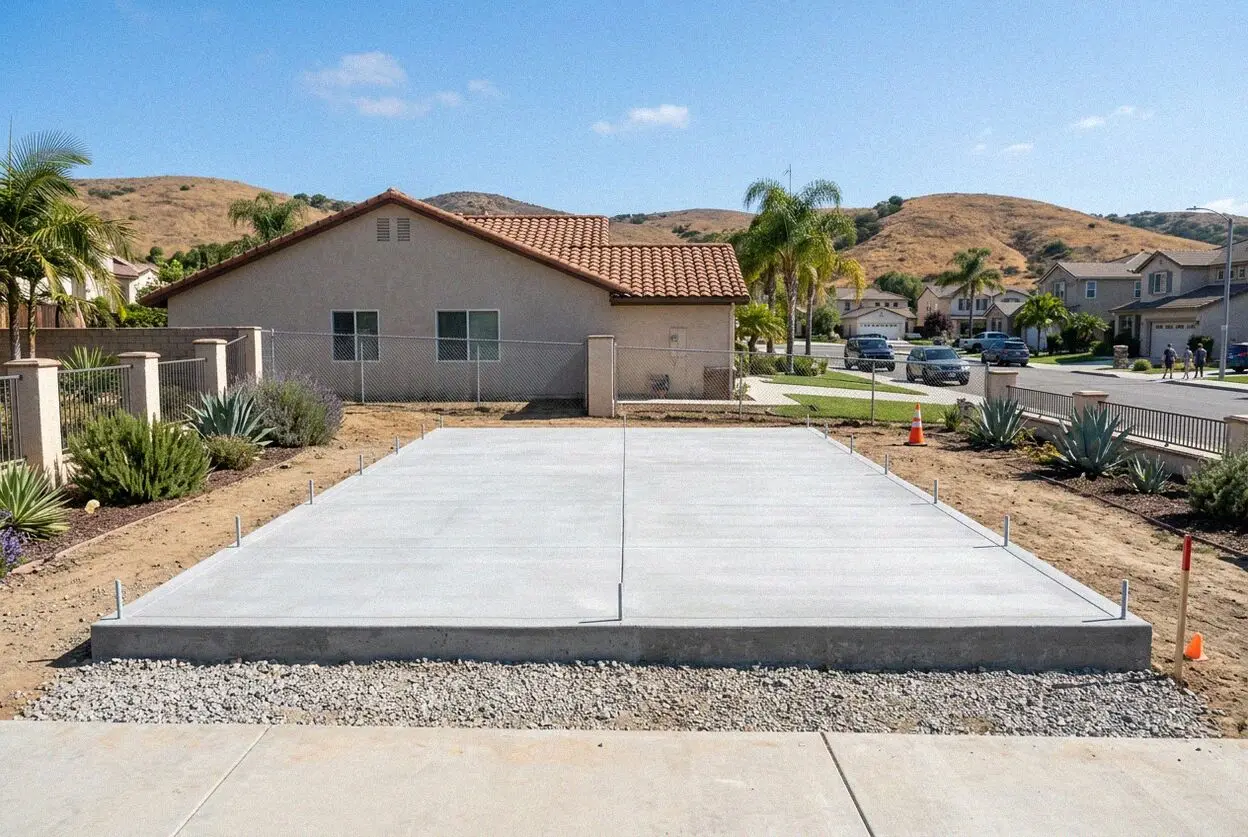
Adding a room on the yard side of the pad? A floor footed through the fill, doweled level to the house slab and sheeted under stays dry.
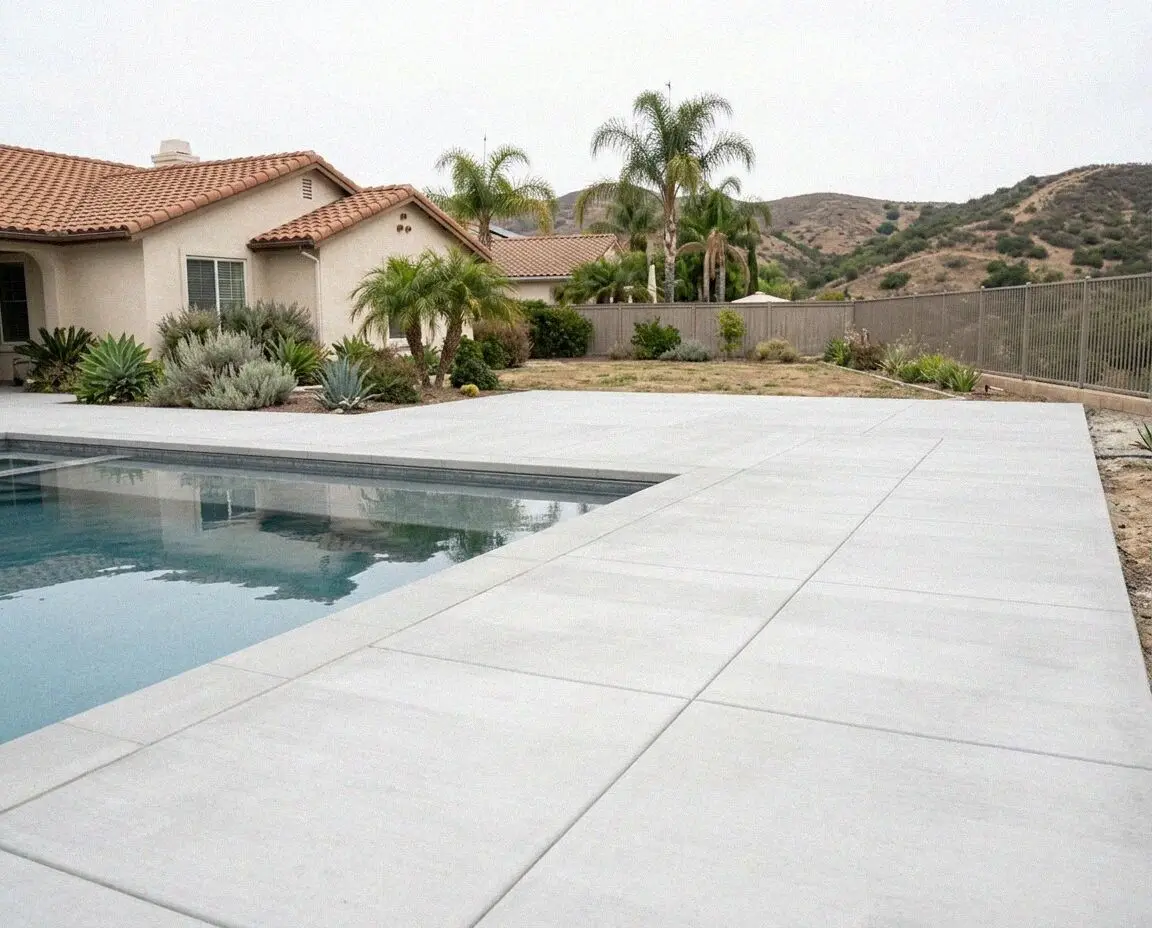
The deck around a pool that stays, rebuilt on a base graded to the yard drain, bonded at the water and pitched away from the slope behind it.
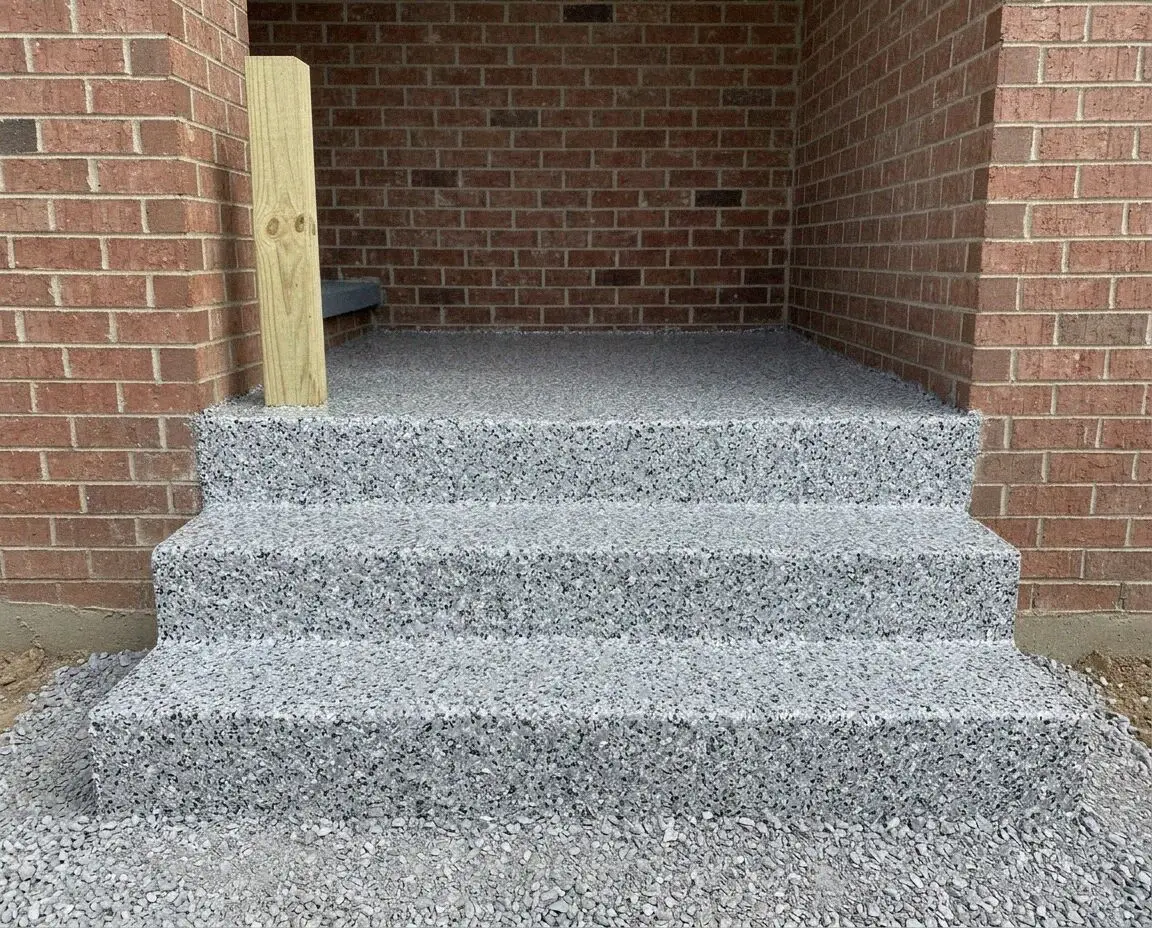
A flight set out from the rise between the street and the door, poured in one piece on a footing, with cheek walls holding the bank beside.
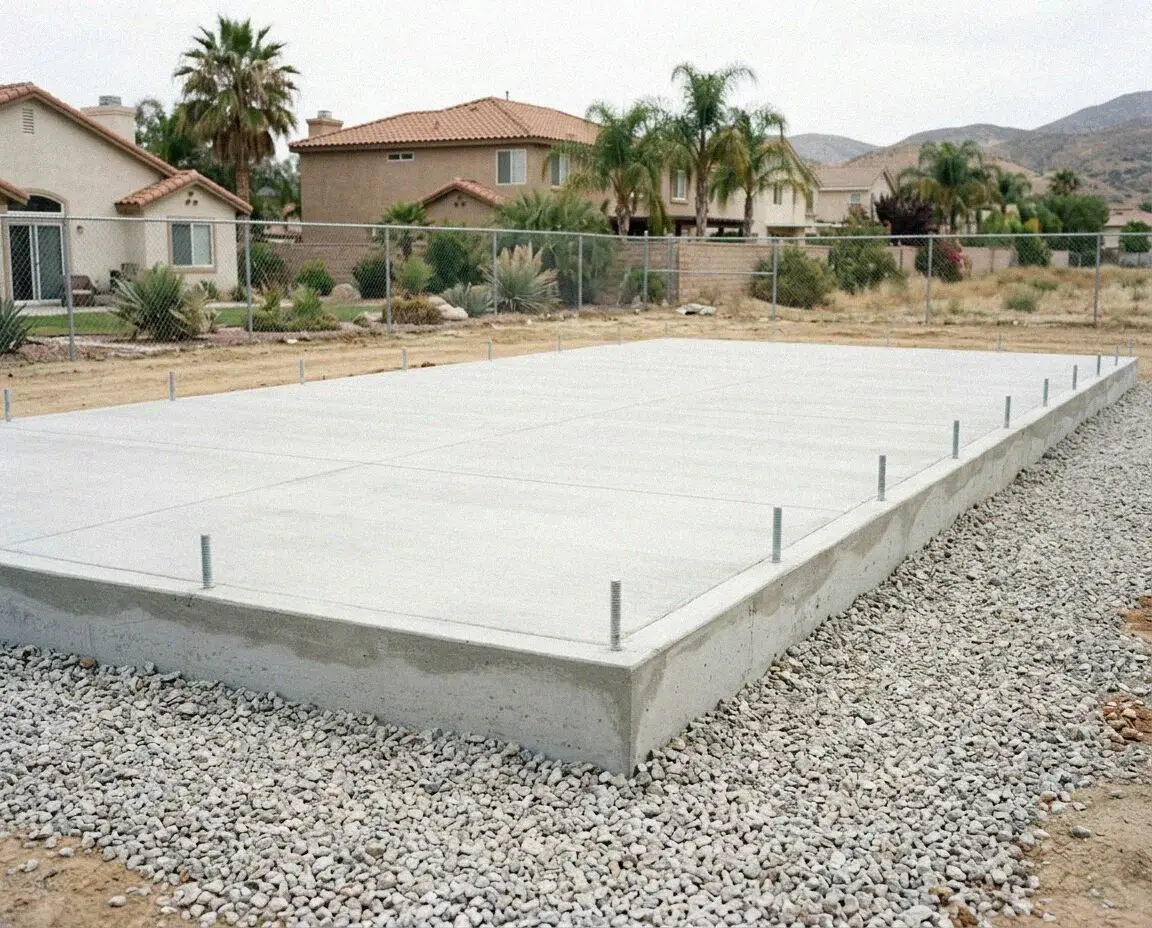
A slab for an ADU or an addition at the back of a graded pad, its edge beams dug through the fill to bearing and drawn by an engineer.
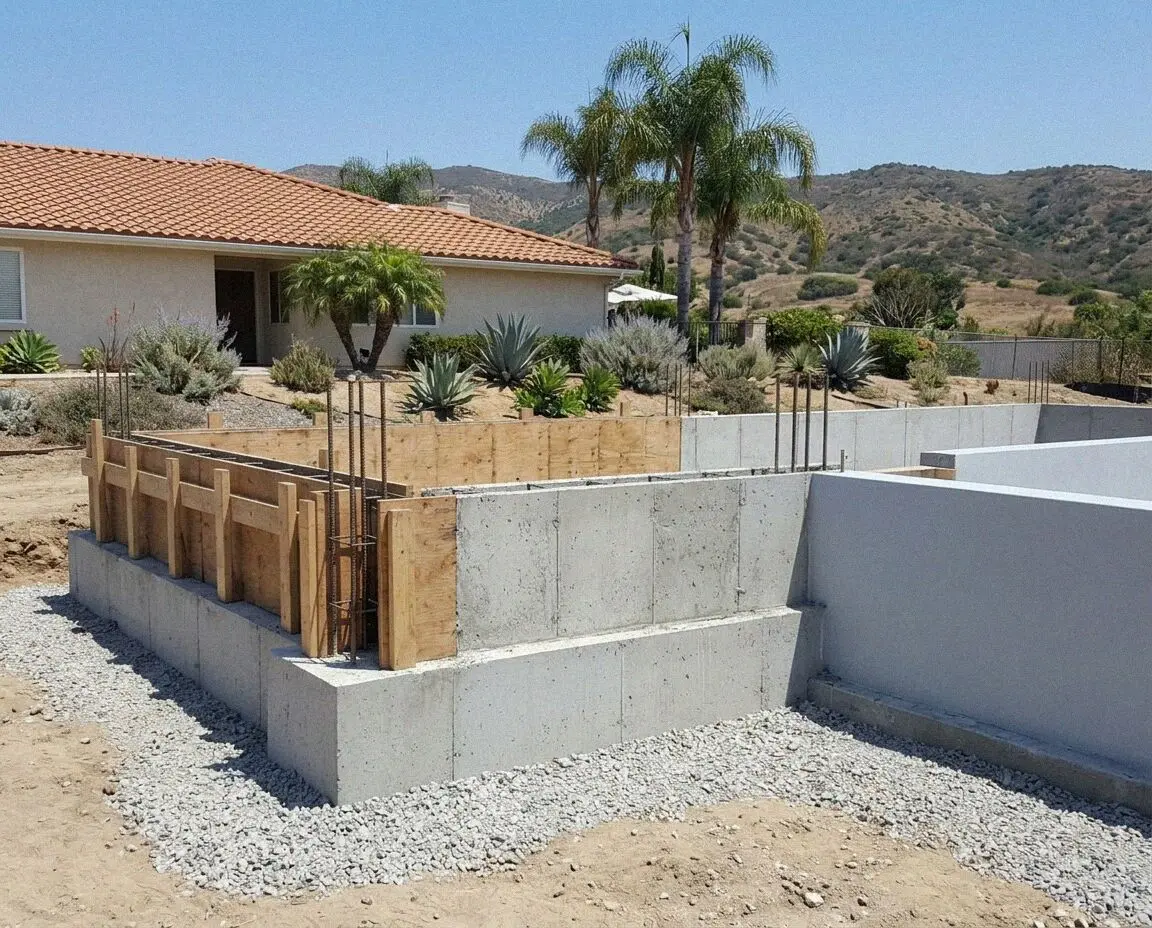
Footings and stem walls for an addition that leaves the flat of a hillside pad, stepped to bearing, drained uphill and drawn by an engineer.
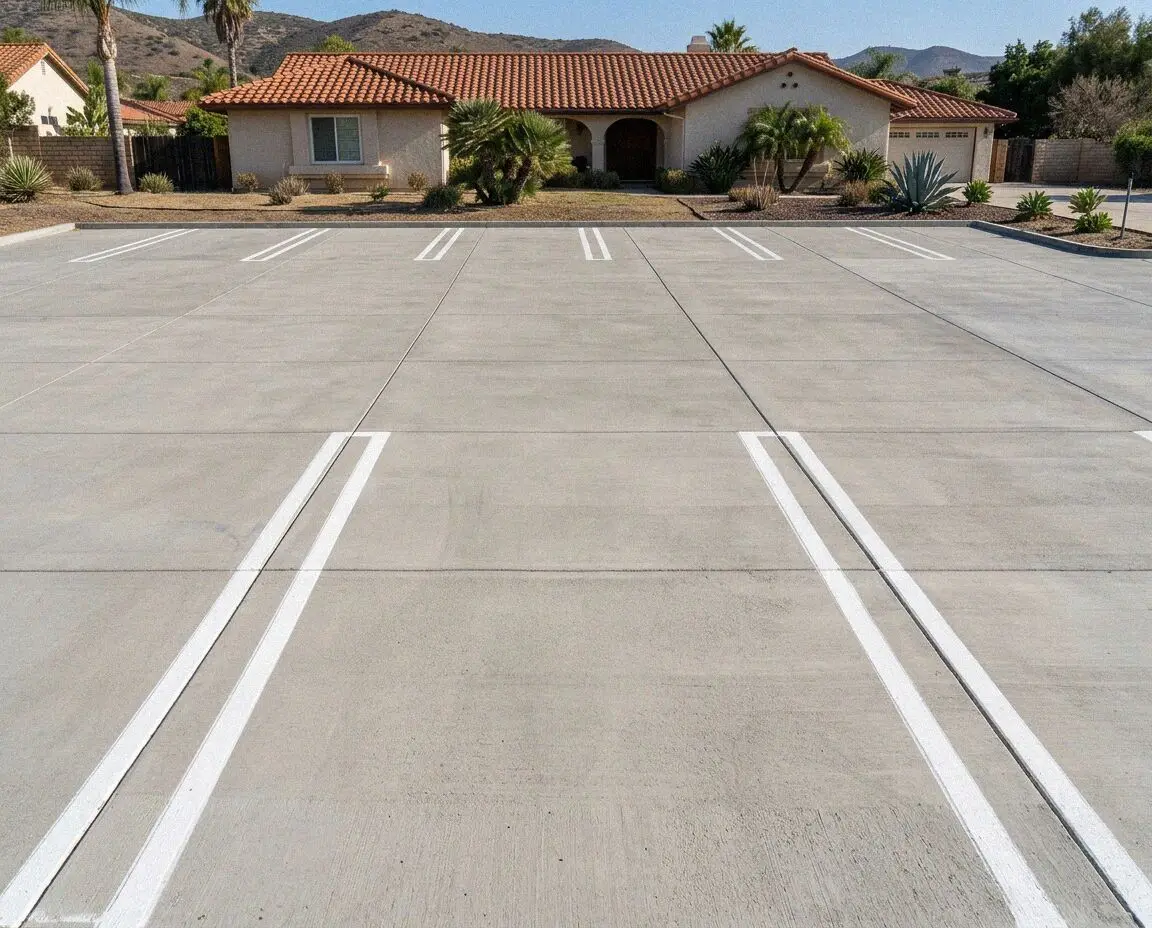
A new lot built from its downhill edge in, thickened over the fill and along the truck aisle, and drained to an inlet on the bench itself.
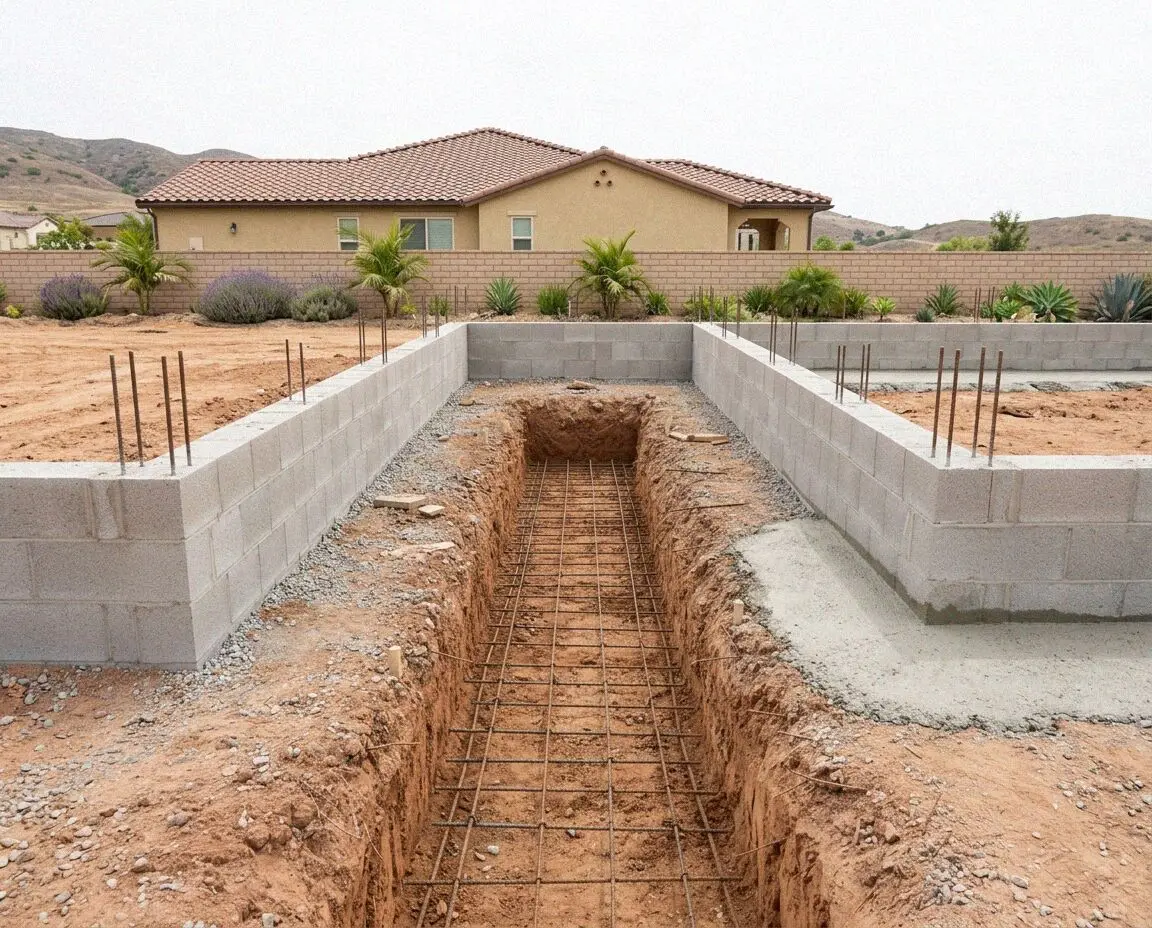
Footings for additions, covers and walls, placed by the setback from the rear slope and dug down through the fill to native siltstone.
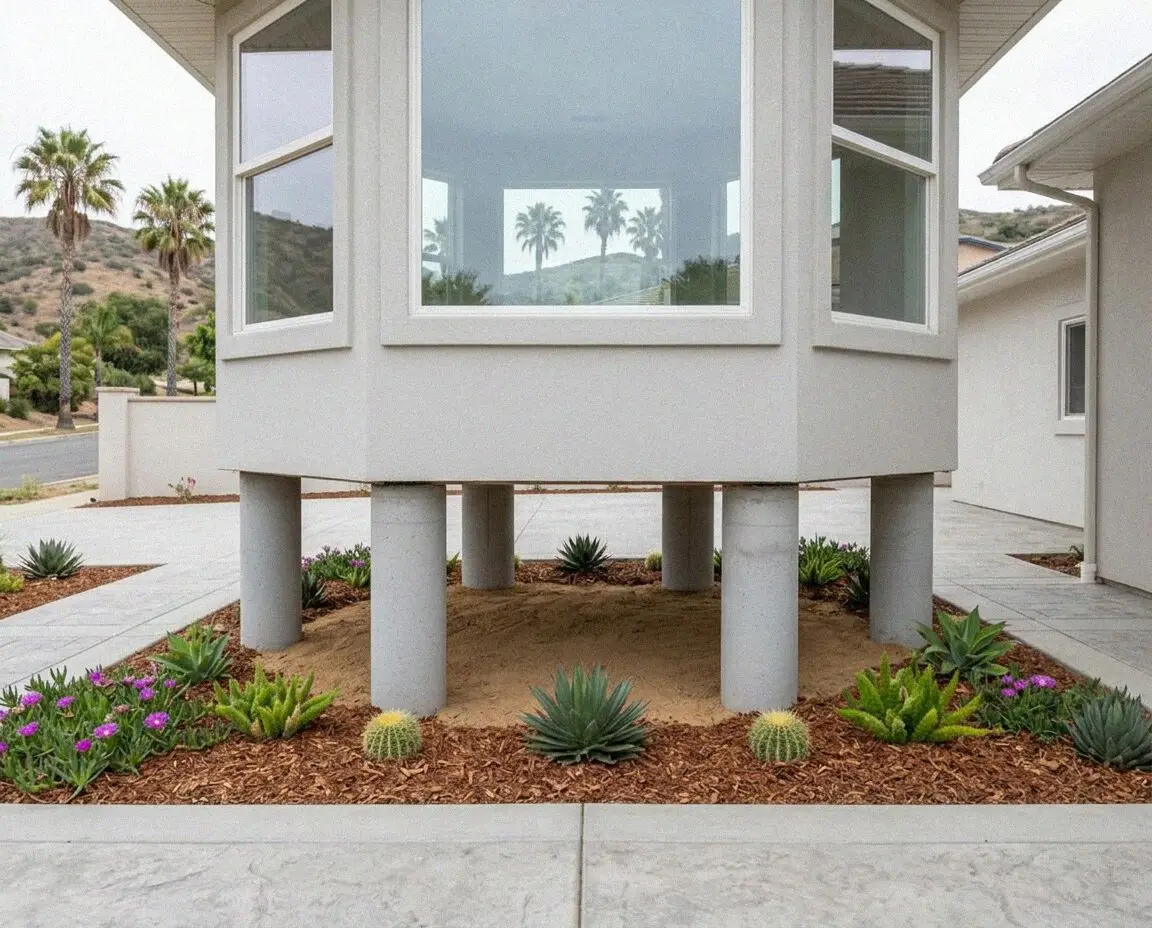
Back wall dropping toward the slope? Steel piers driven through the fill to the cut carry the house, lifted back to a surveyed level.
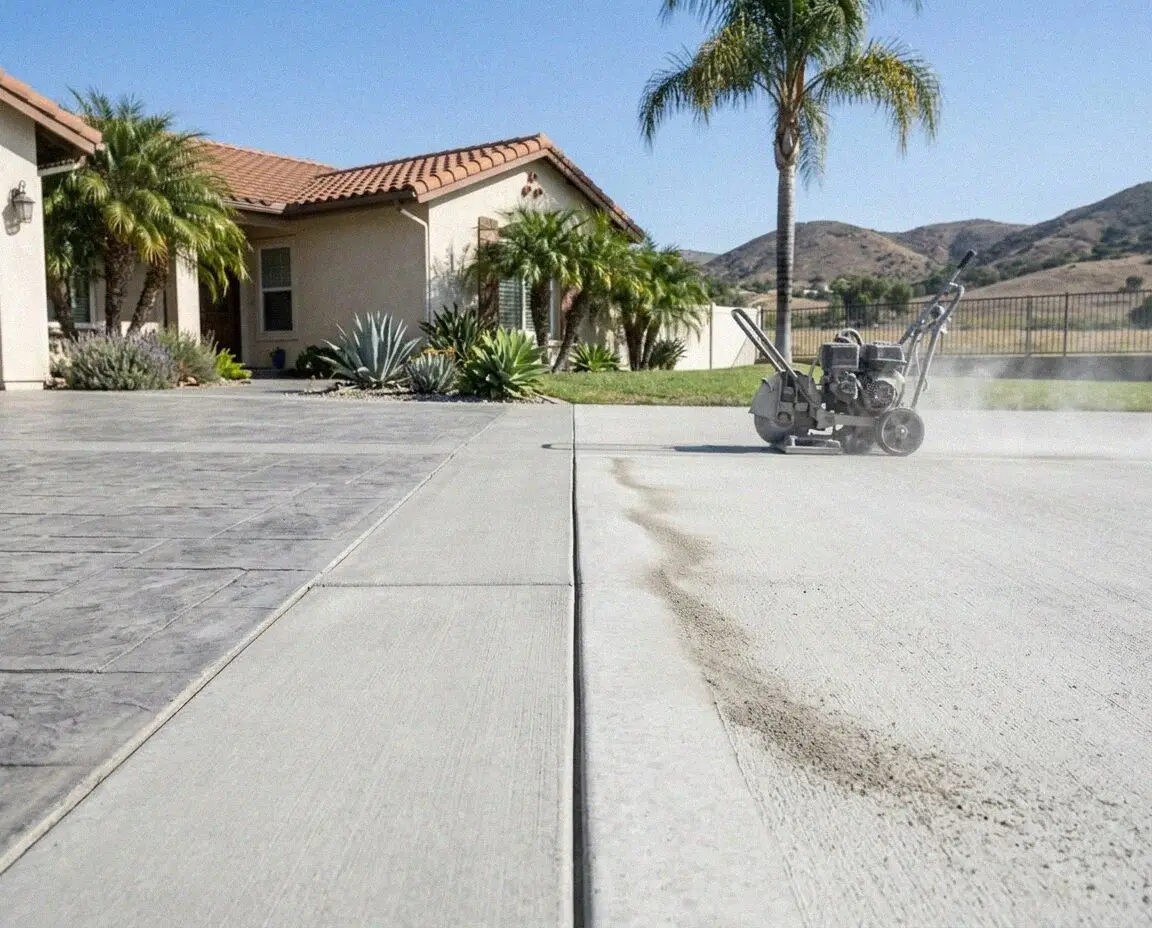
Water stuck behind the house? A trench sawn wet through the walk and the apron on the pipe's own fall, poured back flush and doweled.
Four steps from the first call to the last walk, and the person who measures at step two is the one who runs the pour at step three.
You hear back within 1 business day, and we book the free on-site visit around your week. Nothing is priced over the phone or from a photo.
We measure the work, probe the pad for fill, follow where the water runs and hand you an itemized estimate before we leave.
Once you approve it we file any permit, submit to your association, schedule the crew, and run demolition, base, forms, pour and finish.
We clean up, then walk the slab against the estimate with you, base, thickness, joints and finish, and close only when you are satisfied.
The license is CSLB C-8, held with the California Contractors State License Board and checkable there by name. We carry liability insurance on every job, and it follows the crew into both counties we work, so damage done to your property while we are on it is ours to put right.
Trevor Lindqvist founded the business in Mission Viejo in 2018 after 17 years on crews across south Orange County. The cut and fill pads under Aegean Hills, the clay on the slopes above Oso Creek and the counter at the City's Building Division are known from standing on them.
The visit is free and the number is written before we leave. We measure the work, probe the pad and check where the water goes, then itemize demolition, base, pour, finish and clean-up line by line, so nothing on the estimate is a lump you have to take on trust.
Every job carries a written workmanship guarantee against defects in how it was built. It is claimed here most often against a wall that leans, so the drain behind every wall is in the guarantee's terms. Fill settling under a pad is not a defect, and the estimate says so up front.
Something we have not covered? (657) 390-1824 or send us a message.
Customer Reviews
Reviews left on Google, Facebook and the BBB by homeowners in Mission Viejo, Laguna Niguel and Lake Forest, each about one job, how big it was and how it has held up since.
“Our driveway in Aegean Hills had dropped two inches on the fill side of the pad. They probed it, found the soft half, dug it deeper and packed the base in lifts. They poured 720 square feet at 5 inches, cut the joints across the slope that afternoon, and two winters on nothing has moved.”
“The wall holding our back slope in Laguna Niguel leaned a little more every winter. They took it down, dug the footing 18 inches into hard ground, set drain rock and a pipe behind the new wall and poured it in a day. The first storm since ran clear out of the drain, not over the top.”
“Our pool deck in Lake Forest was the original 1990s one and had lifted at the coping. They cut it out, set an expansion joint around the pool, poured 480 square feet with a salt finish and had it walkable in two days. Bare feet in August and it stays cool enough to stand on.”
About Saddleback Mission Viejo Concrete
Saddleback Mission Viejo Concrete is a concrete contractor on La Paz Road in Mission Viejo, CA. Trevor Lindqvist founded it in 2018 after 17 years on crews across south Orange County, and it pours for homes and businesses in Orange and Riverside counties, from Laguna Niguel to Lake Elsinore.
The work is what a hillside city buys: driveways on pitched lots, pool decks, retaining walls on rear slopes, patios, garage floors and stamped finishes. Every pour is backed by a written workmanship guarantee against defects in how it was built.
The license is CSLB C-8, held with the California Contractors State License Board and checkable on its register. We carry liability insurance on every job, file any permit the City or your association asks for, and meet the inspector. Every estimate is measured and written on site.
The Build Standard
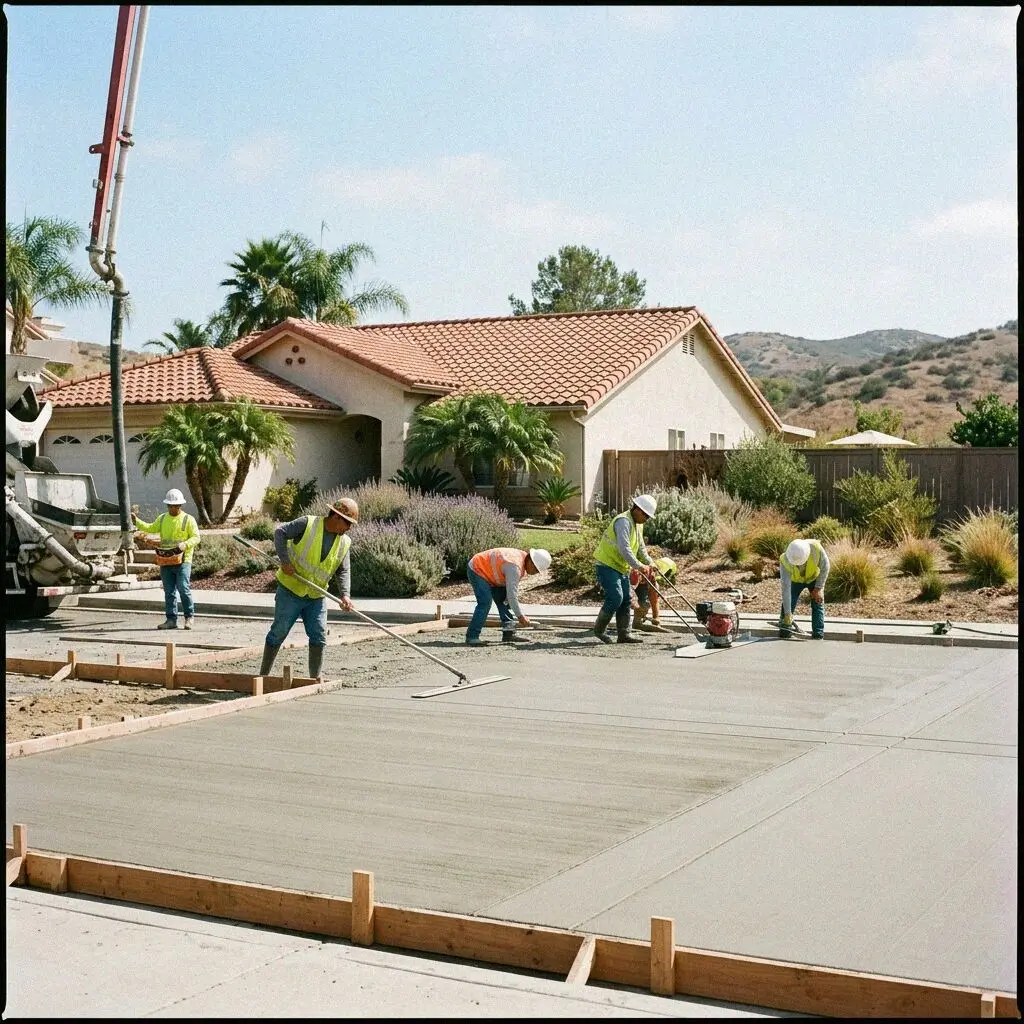
The same sequence whatever the job: the pad is probed for fill, the water is given somewhere to go, gravel goes under it, the pour is 4 to 6 inches to the load, and the joints are cut before the crew leaves.
Drive past the driveway on a Cordova cul-de-sac, the wall behind a Pacific Hills yard or the pool deck in Painted Trails and look at the joints: they run across the fall of the lot, which is the one thing a hillside slab has to get right.
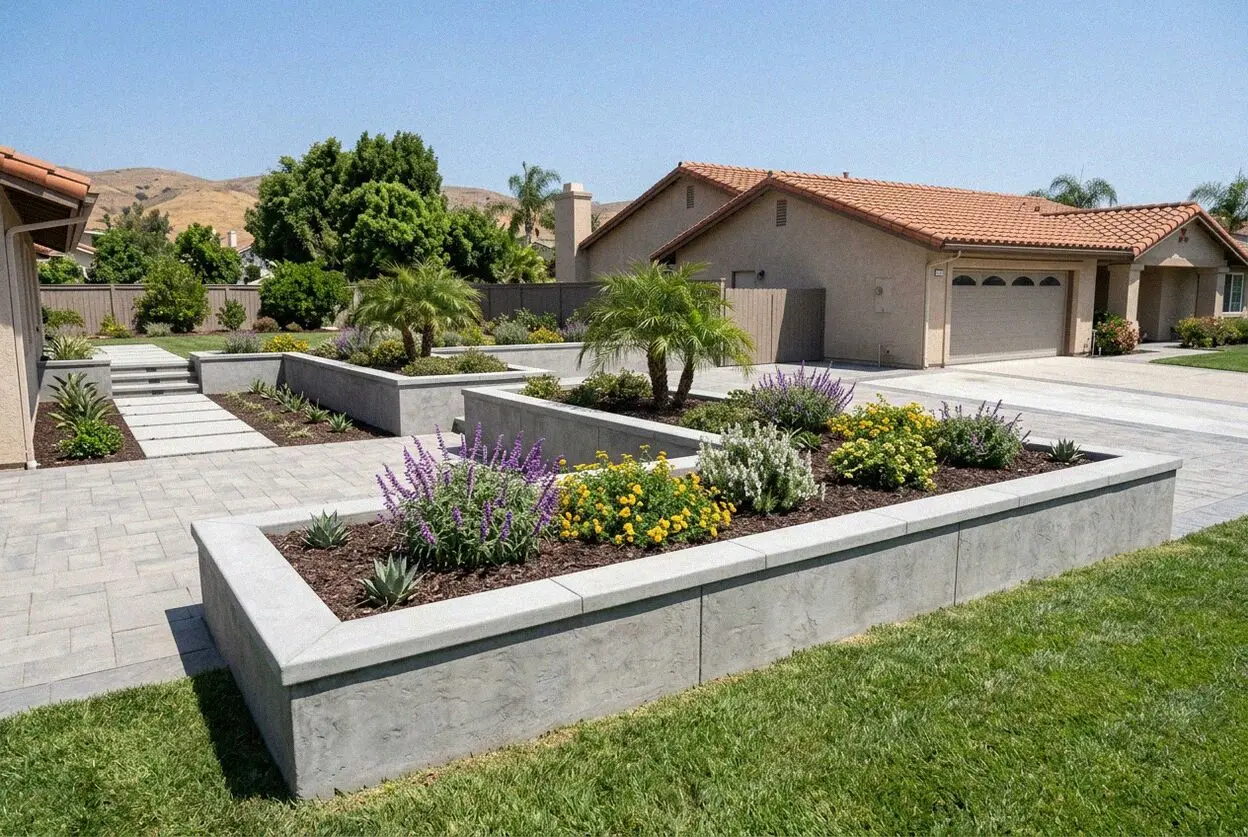
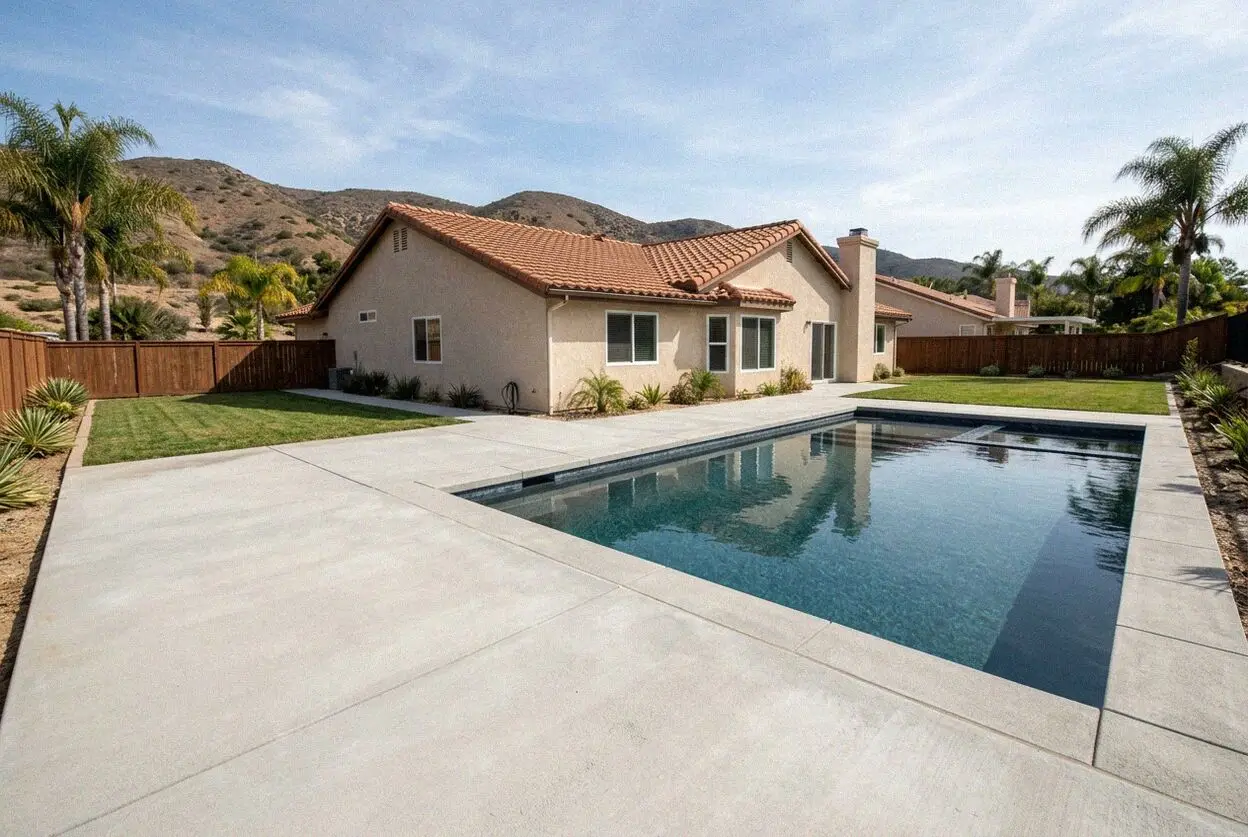
510 sq ft salt finish · Expansion joint at coping

Trevor Lindqvist started Saddleback Mission Viejo Concrete in 2018 after 17 years on crews across south Orange County, most of them on hillside pads from Rancho Santa Margarita to San Clemente. The C-8 license is in his name and he lives in Mission Viejo. He probes the pad on every estimate himself and runs every pour, so the base under your slab is one he has stood on.
Local Knowledge
A city graded out of the Saddleback foothills in the 1960s, most of it under an association, on pads that were cut on one side and filled on the other. Three things every estimate here allows for.
Mission Viejo was laid out by the Mission Viejo Company from the mid 1960s and incorporated in 1988, and almost all of it is planned tract housing on graded pads, from the earliest Deane Homes and Aegean Hills to Pacific Hills and Painted Trails in the 1990s. That puts the first generation of driveways, patios and pool decks at 40 to 60 years old, past the working life of a slab, and most of them on lots with a slope at the back.
The pads were made by cutting the hill on one side and filling on the other, and fill keeps settling long after the house is finished. The natural ground under it is a clay-bearing siltstone that swells in a wet winter and shrinks by September, and the rear slopes drain toward Oso Creek and Trabuco Creek. So we probe every pad before we price it, and where the fill side is soft the base goes deeper and is compacted in layers.
Permits come from the City of Mission Viejo's Building Division, and most neighborhoods also answer to an association with an architectural committee that reviews anything seen from the street. We file with both. The crew works the whole city, from Casta del Sol and Cordova to the lots above Lake Mission Viejo and the streets off Marguerite and Alicia Parkways.
On a sloped Mission Viejo driveway concrete wins because it holds a fall: pavers creep downhill on a pitched base, and asphalt rolls under a turning tire in a September heatwave. On a flat lot pavers are a fair choice, and the table says so.
| Option | Lifespan | Ready to use | Upkeep | On a sloped lot |
|---|---|---|---|---|
| Poured concrete | 30 to 40 years | Walk on it in 24 to 48 hrs, drive in 7 days | Reseal every 2 to 3 years | Holds a fall; joints cut across the slope take the movement |
| Interlocking pavers | 25 to 50 years | The same day | Re-sand joints every 1 to 2 years | Creep downhill on a pitched base unless the edge is restrained |
| Asphalt paving | 15 to 20 years | Cars on in 2 to 3 days | Sealcoat every 2 to 3 years | Rolls and scuffs under a turning tire on a hot grade |
Asphalt is the cheapest to lay and the dearest to keep, pavers the reverse, and concrete sits between them on both. The estimate prices only what your lot needs.
Because the two halves of the pad settle at different rates. Most Mission Viejo lots were graded in the 1960s and 1970s by cutting one side of a hill and filling the other, and fill keeps compacting for decades. We probe the pad first and thicken the base over the fill side.
At least 12 inches into undisturbed ground, and wider at the base than the wall is high. A retaining wall on a Mission Viejo rear slope also gets drain rock and a perforated pipe behind it, because a wall without the drain leans in its second wet winter.
Because the deck and the pool shell move independently. A deck poured hard against the coping cracks at the bond beam when the ground shifts, so we set an expansion joint at the coping and cut control joints on a 10-foot grid, and the deck moves on its own.
Usually yes. Most Mission Viejo neighborhoods sit under an association with an architectural committee, and a change seen from the street, a widened driveway or a new walk, needs its sign-off before the City's. We write the submittal with the estimate so both reviews run at once.
A flat slab inside your lot line usually does not; the California Residential Code exempts driveways, patios and walks. A retaining wall over 4 feet from the footing bottom, or any wall holding a slope above it, needs a building permit from the City of Mission Viejo, and we file it.
4 inches for cars on a flat run, 5 inches where the apron pitches down to the garage. A sloped driveway carries water off the pad as well as the car, so we thicken the low end, tool a swale at the garage door and set the joints across the fall. The thickness is on the estimate.
The questions we are asked on the doorstep in Mission Viejo, answered straight: what moves the estimate, how thick, what goes underneath, the pads, the slopes, the association, the permit and the guarantee.
The slope moves the estimate before the size does. A driveway that pitches to the garage needs a thicker low end, a swale and forms cut to the grade, and a pad with a soft fill side needs the base dug deeper on that half. After that it is how much old slab comes out and the finish. We measure all of it on a free visit and put the number in writing, because two lots on one street can be two different jobs.
Often not, and that is the second thing that moves the estimate. Most Mission Viejo rear yards sit above or below the street behind a side gate under 40 inches, so the concrete goes in by line pump from the truck at the curb, or by barrow where a pump cannot reach. A pumped pour costs the pump for the morning; a barrowed one costs labor. The visit settles which, and the estimate names it.
4 inches under cars, 5 inches at the low end of a sloped apron and 6 inches where a truck or an RV parks. An inch short is not visible on the day and cracks under normal use inside a few years, with no repair that puts it back. We pour to the use, and the thickness is on the estimate.
A compacted gravel base, 4 inches of it, over ground that has been probed and compacted. The base spreads the load and lets water out from underneath; without it the slab bridges the soft spots and cracks where they give. On a Mission Viejo pad the soft spot is usually the fill side, and that is where the base goes deeper.
Across the fall, on a grid no wider than 10 feet each way for a 4-inch slab. Control joints are grooves cut into fresh concrete that tell a shrinkage crack where to land, straight and hidden. On a slope the cracks want to run downhill, so the joints cross the grade and are cut the day of the pour.
Yes, where the slab crosses the line between cut and fill. The cut half of a pad is undisturbed ground and the fill half keeps settling for decades, so a slab poured level across both drops on one side and cracks along the seam. We probe the pad, thicken the base over the fill and put a joint on the seam, so the slab can move in two pieces instead of breaking.
Any month but the weeks the Santa Ana winds blow. Mission Viejo sits far enough inland that September and October afternoons can pass 95 degrees with a dry wind, which pulls water out of the surface faster than the slab can set. In those weeks we pour early and keep the surface wet for 7 days. The rest of the year, spring cloud included, cures a slab evenly.
Yes, on anything colored, stamped or around a pool. Unsealed concrete is porous, so pool chemicals, oil and leaf tannin soak in and stain, and afternoon sun fades a color. A plain broom driveway can go unsealed; a stamped patio or a pool deck is resealed every 2 to 3 years, and we say which on the estimate.
3 to 5 working days on site for most jobs, then curing. Demolition and base take the first two days, the pour is one morning, and the joints are cut the same afternoon. Keep feet off for 24 to 48 hours and cars off a driveway for 7 days; a wall is backfilled at 7 days too. Full strength comes at 28 days.
Not for a flat slab inside your lot line: the California Residential Code exempts driveways, patios and walks. A retaining wall over 4 feet measured from the bottom of the footing, any wall carrying a slope above it, and a slab under a structure need a building permit from the City of Mission Viejo, and most associations want an architectural approval first. We file both and meet the inspector.
Defects in how the job was built: base, thickness, joints, finish and, on a wall, the drain behind it. Every job carries a written workmanship guarantee against defects in how it was built, with its terms on the estimate you sign. It does not cover staining, wear or the fill under a pad settling further, and a hairline that lands in a joint is the joint working. A fault in the build, we come back and fix.
On the calendar: you call or send the form and hear back within 1 business day; the visit is booked for a day that suits you and the written estimate is handed over on the spot. An association review or a City permit adds its own review time, and the start date allows for it. The crew is on site 3 to 5 working days, the walk-through is the day the joints are cut, and cars go back on a driveway 7 days later.
Service Area
From the coast at Dana Point to the new tracts at Temescal Valley, the towns below are the ones whose pads, slopes and permit counters we know from working on them. Find yours in the list, or call and we will tell you straight away whether we come to you.
 Open the Mission Viejo Office in Google Maps
 Call or send the form. You hear back within 1 business day and we book a free visit. Every estimate is measured and written on site, by Trevor Lindqvist, itemized line by line, with no obligation and nothing priced until the pad has been probed.